
Pokémon Personality Categories in Pokémon Pokopia
A community-researched guide to Pokémon personality categories in Pokémon Pokopia, how to identify them, and where the current findings are still uncertain.
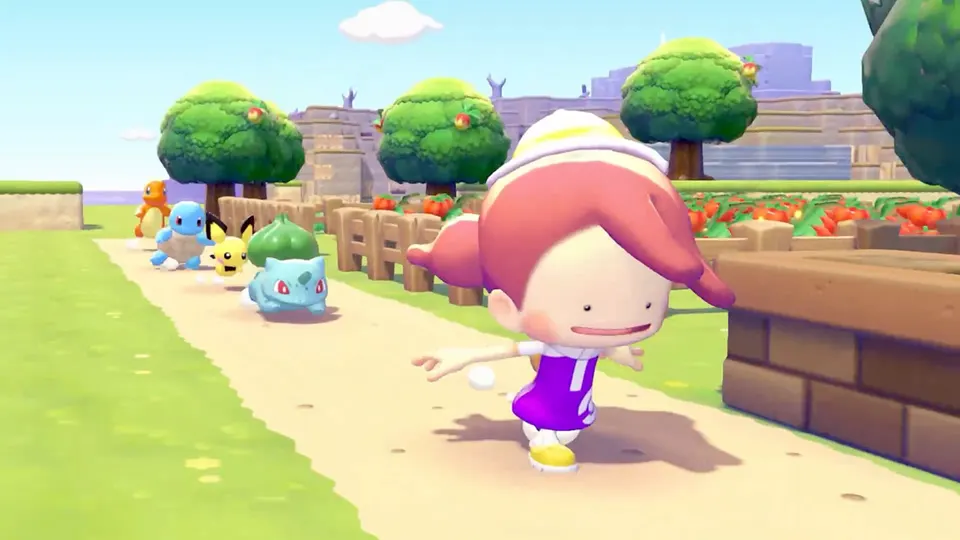
If you've spent time chatting with your island residents, you've probably noticed that not every Pokémon talks in a totally unique way. Based on a detailed community research post on Reddit, the current best working theory is that most house-able Pokémon in Pokémon Pokopia fall into a shared set of personality categories rather than each having a one-off dialogue style.
This is not an official in-game label system. It is a community guide based on observed dialogue patterns, especially the line a Pokémon says when you quick-follow it.
Short answer
The Reddit research currently suggests:
- There are 19 distinct personality categories among the game's house-able Pokémon.
- 17 of those are shared across many Pokémon.
- 2 appear to be unique: Professor Tangrowth and Peakychu.
- A few special cases, including some non-house-able or event-related Pokémon, may sit outside this chart or use slightly modified dialogue.
You can browse the full Pokémon list if you want to compare species while reading.
How the categories were identified
The key method is simple:
- Stand next to a Pokémon.
- Use the quick-follow input rather than opening the full dialogue menu.
- Record the short line they say when agreeing to follow.
That distinction matters. One of the most useful takeaways from the Reddit thread is that quick-follow quotes and full dialogue follow quotes are not always the same. If you mix those methods, your results can look inconsistent even when the personality grouping is correct.
The 19 currently proposed categories
These names are community shorthand, not official terminology:
- Normal — standard friendly tone.
- Cheerful — more energetic than Normal.
- Childlike — younger, more innocent tone.
- Peppy — upbeat, slang-heavy style.
- Relaxed — slower and calmer.
- Stoic — cold, serious, not very emotive.
- Jock — energetic and buddy-like.
- Lazy — drawn-out speech and lower energy.
- Auntie — warm, caring, often uses affectionate terms.
- Uncle — jovial, old-fashioned, slightly rougher phrasing.
- Elegant — graceful and polished.
- Laid-back — calm, plain-spoken.
- Shy — timid, often hesitant or stuttering.
- Baby — toddler-like speech patterns.
- Youngster — casual, playful, often "yo"-style wording.
- Cool — informal, excited, and friendly.
- Emotionless — robotic or monotone delivery.
- Professor Tangrowth — appears to have a unique category.
- Peakychu — appears to have a unique category.
Why this is useful
Even though personalities do not replace other systems like specialties, spawn conditions, or favorite flavors, they are still helpful for players who care about:
- Choosing island residents for a certain vibe
- Grouping Pokémon with matching dialogue styles
- Understanding why some Pokémon "feel" similar in conversation
- Spotting likely dialogue families before you befriend everything
If you're still building your roster, the Beginner Tips guide is a good companion read.
Important caveats
This guide should be treated as a high-quality community finding, not a final official database entry.
- The category names are invented by the researcher for convenience.
- Some lines may differ across localized English text versions.
- Event Pokémon and special-story Pokémon may behave differently.
- Minor differences still exist inside shared categories, such as cries, intro scenes, and request dialogue.
The Reddit comments also highlight at least two important edge cases:
- Sableye was still not fully confirmed at the time of the post because players could not always test normal follow behavior yet.
- Some players initially reported mismatched lines, but later realized they were comparing different follow methods rather than true category conflicts.
Best way to use this info
If you want to verify a Pokémon yourself:
- Use the same quick-follow method every time.
- Compare the exact short response line.
- Check multiple Pokémon you already know belong to a category.
- Be cautious with event or story-only situations.
For practical island planning, this guide works best alongside the Habitats page and the full Pokémon list.
Source
This guide is based on a community research thread:
The original post also links to a spreadsheet compiled by the author. Since this is community research rather than official game data, you should expect small corrections over time.